

Have you ever tasted a truly spectacular, restaurant-quality lasagna and wondered what the secret was? You might think it’s a complex, slow-simmered sauce or an exotic blend of cheeses. But I’m here to tell you that the real, game-changing secret to the most incredible lasagna you will ever eat lies in the foundation of the dish itself: the pasta.
Making pasta from scratch might sound like a daunting task reserved for Italian nonnas or professional chefs, but I promise you, it is one of the most rewarding, fun, and surprisingly simple kitchen projects you can undertake. This guide will demystify the entire process, showing you step-by-step how to transform a few humble ingredients into silky, tender, and delicate pasta sheets. Forget the brittle, flavorless noodles from a box forever.
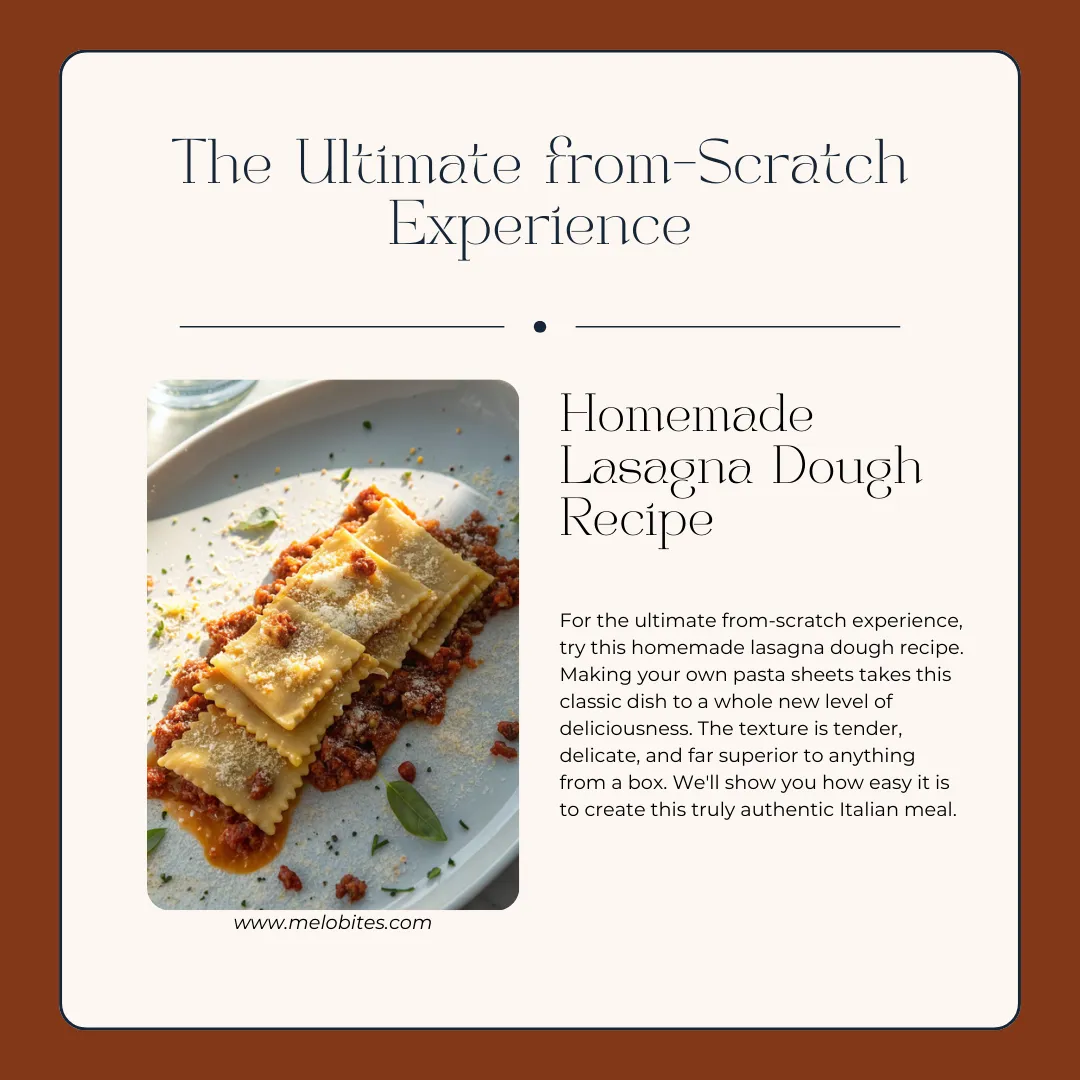
Get ready to embark on the ultimate from-scratch experience. We’re going to get our hands a little dusty, connect with our food in a meaningful way, and create the most delicious foundation for a truly authentic Italian meal. Your lasagna will never be the same again.
Why This Homemade Lasagna Dough Recipe Will Change Everything
Once you try a lasagna made with this homemade lasagna dough recipe, you will understand why it’s worth the little bit of extra effort. The difference in texture is truly night and day; where boxed noodles can be tough or gummy, fresh pasta is incredibly tender, delicate, and almost melts in your mouth. It has a rich, eggy flavor that the dried version simply cannot replicate.
Furthermore, fresh pasta has a slightly rougher, more porous surface than its commercially produced counterpart. This means it doesn’t just hold your sauce; it lovingly absorbs it, ensuring every single bite is infused with flavor. This isn’t just an ingredient; it’s a fundamental upgrade that elevates the entire dish from a simple casserole to a gourmet experience.
Crafting Fresh Pasta Sheets: A Gateway to From-Scratch Cooking
Learning to craft your own fresh pasta sheets is so much more than just a step in a single recipe. It’s a foundational skill that serves as a gateway to the deeply satisfying world of from-scratch cooking. Mastering this simple dough will fill you with a sense of accomplishment and the confidence to tackle other culinary projects.
There is a unique joy and connection that comes from transforming basic ingredients like flour and eggs into something so delicious with your own two hands. It’s a process that encourages you to slow down, be present, and appreciate the art of creating food. Once you’ve mastered this, you’ll see your kitchen in a whole new light, full of endless possibilities.
Two Paths to Perfection: How to Make Lasagna Noodles With or Without a Pasta Machine
The wonderful news is that you don’t need any fancy equipment to start your pasta-making journey. This guide will show you how to make lasagna noodles using two different methods, proving that anyone can do it. Whether you have a pasta machine or just a trusty rolling pin, silky, perfect noodles are within your reach.
The first path involves using a pasta roller, either a manual crank machine or a stand mixer attachment, which makes the process of thinning the dough quick and incredibly easy. The second path is the traditional, time-honored method using nothing more than a long rolling pin and a little bit of muscle. Both methods are meditative and effective, and both lead to the same delicious destination.
Why You’ll Love Making Homemade Lasagna Dough
- Incredibly Tender Texture: The final product is silky, delicate, and has a luxurious chew that is far superior to any store-bought noodle.
- Superior Flavor & Absorption: The rich, eggy flavor of fresh pasta and its ability to absorb sauce will elevate your entire lasagna dish.
- A Fun & Rewarding Process: There is immense satisfaction in making something so delicious from scratch. It’s a fun project for a quiet afternoon or even to do with kids.
- Simple, Wholesome Ingredients: You have complete control over what goes into your pasta: just flour, fresh eggs, olive oil, and salt.
Nutritional Benefits
One of the greatest benefits of making your own lasagna dough is the simplicity and wholesomeness of the ingredients. You are using basic, unprocessed pantry staples, so you know exactly what is in your food without any preservatives or additives. It’s clean eating in its most delicious form.
The dough is primarily made from flour for energy and fresh eggs, which are a fantastic source of high-quality protein, vitamins, and minerals. This creates a more nutrient-dense and satisfying foundation for your meal. You are not just making pasta; you are creating nourishment from the ground up.
The Ultimate Homemade Lasagna Dough Recipe
Prep Time: 45 minutes (includes resting) | Cook Time: 2-3 minutes (if boiling) | Total Time: about 50 minutes | Yield: about 1.5 lbs (enough for one 9×13 lasagna) | Category: Basics | Method: Handmade/Machine | Cuisine: Italian | Diet: N/A
Essential Ingredients for this Homemade Lasagna Dough Recipe
- 3 1/2 cups “00” flour (or all-purpose flour), plus more for dusting
- 4 large, fresh eggs
- 1 tbsp extra-virgin olive oil
- 1 tsp fine sea salt
Ingredients Notes
- The Flour: Italian “00” flour is ground extra-fine, which creates the silkiest, most tender pasta imaginable. However, regular all-purpose flour works beautifully as well and is a great place to start if it’s what you have on hand.
- Fresh Eggs: Since eggs provide the richness, flavor, and color of the dough, using high-quality, fresh eggs will make a noticeable difference.
- Olive Oil and Salt: A little bit of olive oil adds suppleness and flavor to the dough, making it easier to work with. Fine sea salt is essential for seasoning the pasta from the inside out.
How to Make Homemade Lasagna Dough
Method 1: Making the Dough By Hand
- Step 1: Form the Well. On a clean, large work surface (like a wooden board or countertop), mound your flour and create a deep, wide well in the center. It should look like a volcano.
- Step 2: Add Wet Ingredients. Crack the 4 eggs into the center of the well. Add the olive oil and salt on top of the eggs.
- Step 3: Begin Mixing. Using a fork, gently beat the eggs, oil, and salt together. Gradually begin incorporating the flour from the inner walls of the well into the egg mixture. Continue pulling in more flour until a thick, shaggy dough begins to form.
- Step 4: Knead the Dough. Once the dough is too thick to mix with a fork, begin to knead it with your hands, incorporating the remaining flour. Knead for 8-10 minutes, until the dough is smooth, elastic, and springs back when you poke it.
- Step 5: Rest the Dough. Wrap the dough tightly in plastic wrap and let it rest at room temperature for at least 30 minutes. This is a crucial step that allows the gluten to relax, making the dough much easier to roll out.
Method 2: Using a Stand Mixer
- Step 1: Combine Ingredients. In the bowl of your stand mixer fitted with the dough hook attachment, combine the flour and salt.
- Step 2: Mix the Dough. Turn the mixer on low speed and add the eggs and olive oil. Continue to mix until a shaggy dough comes together.
- Step 3: Knead with the Mixer. Increase the speed to medium-low and let the mixer knead the dough for 6-8 minutes, until it is smooth and elastic. If the dough seems too dry, add a teaspoon of water; if too sticky, add a tablespoon of flour.
- Step 4: Rest the Dough. Remove the dough from the bowl, form it into a ball, and wrap it tightly in plastic wrap. Let it rest at room temperature for at least 30 minutes. Some of the best stand mixers, like a KitchenAid, make this process nearly effortless.
Rolling Method 1: With a Pasta Machine
- Step 1: Prepare the Dough. Cut the rested dough into four equal pieces. Gently flatten one piece into a rectangle with your hands and dust it lightly with flour. Keep the other pieces covered.
- Step 2: The First Pass. Set your pasta roller to its widest setting. Feed the flattened dough through the roller.
- Step 3: Laminate the Dough. Fold the resulting sheet of dough into thirds, like a letter. Feed it through the widest setting again. Repeat this folding and rolling process 2-3 times to strengthen the dough.
- Step 4: Thin the Sheets. Continue feeding the dough through the machine, decreasing the thickness setting by one notch each time. Roll until you reach your desired thickness, typically the second-to-last setting for lasagna.
- Step 5: Cut to Size. Lay the long sheet of pasta on a lightly floured surface and cut it into your desired lengths for layering in your lasagna pan. Repeat with the remaining dough.
Rolling Method 2: With a Rolling Pin
- Step 1: Prepare the Dough. Cut the rested dough into four pieces. On a large, lightly floured surface, begin to roll out one piece of dough with a long, heavy rolling pin.
- Step 2: Roll and Turn. Roll from the center of the dough outwards, applying even pressure. After every few passes, lift and rotate the dough a quarter turn to ensure it doesn’t stick and maintains an even shape.
- Step 3: Roll Until Thin. Continue rolling until the dough is very thin, about 1/16th of an inch thick. You should be able to see the shadow of your hand through it.
- Step 4: Cut to Size. Use a sharp knife or a pizza cutter to trim the dough into large, neat rectangles suitable for your lasagna pan. Repeat with the remaining dough.
Storage Options
Proper storage is key to keeping your fresh pasta perfect. If you plan to use the pasta sheets within an hour or two, you can lay them flat on a lightly floured baking sheet, dusting them with more flour and covering them with a clean kitchen towel.
For longer storage, you can either dry or freeze the pasta. To dry, hang the sheets over a pasta rack or the back of a chair until completely brittle. To freeze, let the sheets air-dry for about 30 minutes, then stack them between layers of parchment paper and place them in a freezer-safe bag for up to 3 months.
Variations and Substitutions
- Spinach Pasta: For beautiful green pasta, add 5 ounces of thawed and very well-drained frozen spinach (squeezed completely dry) to the eggs and blend before adding to the flour.
- Herb Pasta: Add 2-3 tablespoons of finely chopped fresh herbs like parsley, basil, or chives to your flour before mixing for a fragrant, speckled dough.
- Whole Wheat Pasta: For a heartier, nuttier noodle, you can substitute up to half of the “00” or all-purpose flour with whole wheat flour.
Practical & Valuable Tips
- Don’t Skip the Rest! The 30-minute resting period is absolutely essential. It allows the gluten to relax, transforming the dough from tough and difficult to soft, supple, and easy to roll.
- Keep It Covered: Gluten-based doughs can dry out quickly when exposed to air. Always keep the portion of dough you are not actively working with covered with plastic wrap or a bowl.
- Flour is Your Friend: Don’t be afraid to lightly flour your work surface, your hands, and your pasta machine to prevent sticking. Just be sure to brush off any excess flour from the finished sheets before cooking.
Frequently Asked Questions
- Is “00” flour really necessary to make good pasta? No, it’s not necessary, but it is highly recommended for the best texture. “00” flour creates a uniquely silky and tender pasta. However, you can make absolutely delicious homemade pasta with regular all-purpose flour.
- My dough feels too dry or too sticky. How can I fix it? Pasta dough is sensitive to humidity. If it’s too dry and crumbly, add water 1/2 teaspoon at a time. If it’s too sticky, add flour 1 tablespoon at a time, kneading well after each addition until it reaches a smooth, play-doh-like consistency.
- Do I need to boil fresh lasagna noodles before layering? This is a great question with some debate. For the most delicate result, a very quick 30-60 second boil in salted water is recommended. However, if your lasagna has a fairly thin, ample sauce, you can layer the fresh, uncooked sheets directly into the dish, as they will cook from the heat and moisture of the sauce.
- How thin should I roll my lasagna sheets? A good rule of thumb is to roll them thin enough that you can just begin to see the outline of your hand through the dough. On a standard pasta machine with settings from 1-7, this is usually setting #6.
- Can I make the pasta dough ahead of time? Yes! You can make the ball of dough, wrap it very well in plastic wrap, and refrigerate it for up to 2 days before you plan to roll it out. Just be sure to let it sit at room temperature for about 30 minutes to make it easier to work with.
You have now unlocked the ultimate secret to a truly unforgettable lasagna. Enjoy the incredibly rewarding process of turning flour into a feast!
Ready to take your lasagna to a whole new level of deliciousness? Pin this Ultimate Guide to Homemade Lasagna Dough to your ‘From-Scratch Recipes’ or ‘Authentic Italian’ board on Pinterest!








Leave a Comment