
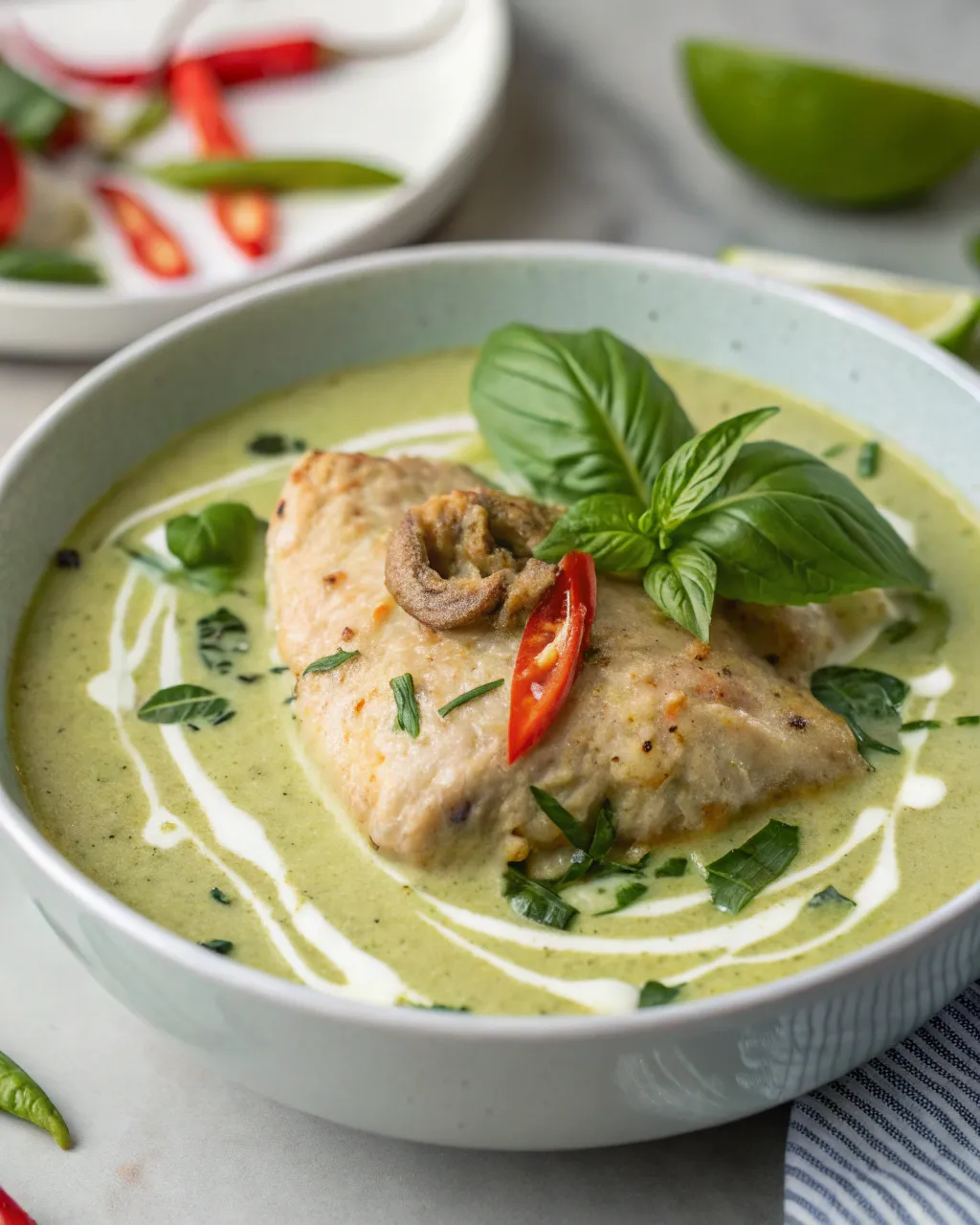
It’s a beautiful Sunday afternoon, and maybe you’re craving a dinner that can transport you somewhere exotic and exciting. Let’s talk about the magic of Thai cuisine. Is there any other food in the world that so perfectly balances the four fundamental tastes—spicy, sweet, sour, and salty—in every single bite? At the pinnacle of this culinary artistry sits one of the most famous and beloved dishes of all: Thai Green Curry.
We’ve all had it at our favourite Thai restaurant. That vibrant, fragrant, and deceptively fiery curry with its beautiful, creamy coconut sauce. It seems like a complex dish, a mystery of spices and herbs that would be impossible to replicate at home. But what if I told you that you could create a green curry in your own kitchen that is just as aromatic, just as creamy, and just as delicious as the one you love? Today, we are demystifying this iconic dish and creating a spectacular Creamy Coconut Thai Green Curry with juicy chicken thighs.
The Iconic Dish: Authentic Thai Green Curry Chicken
A true Thai Green Curry Chicken is an experience. It’s defined by the unique, potent flavour of the green curry paste itself. This isn’t just a simple mix of spices; it’s a fragrant, powerful blend made from a base of fresh, fiery green chilies, aromatic lemongrass, pungent galangal (a cousin of ginger), fragrant kaffir lime peel, and a host of other herbs and spices. This paste is the very heart and soul of the dish, providing a complex, herbaceous heat.
The genius of the dish is how that spicy, aromatic paste is perfectly tamed and balanced by the rich, sweet creaminess of full-fat coconut milk. This creates a sauce that is simultaneously spicy and soothing, complex and incredibly comforting. When you add tender, juicy pieces of chicken thigh to that sauce, you have a complete dish that is a true icon of global cuisine for a very good reason.
A Perfect Creamy Coconut Curry Recipe for Easy Thai Food for Beginners
This dish is the ultimate creamy coconut curry recipe. The luxurious, velvety texture of the sauce is a hallmark of great Thai cooking, and it is achieved by using good quality, full-fat coconut milk. It provides a rich sweetness that beautifully balances the spice of the curry paste and creates a sauce that you will want to pour over everything. It’s this creamy element that makes the curry so satisfying and comforting.
This recipe is also a perfect entry point for anyone looking for easy Thai food for beginners. While making your own green curry paste from scratch can be a labour-intensive process, this recipe utilizes a high-quality, store-bought curry paste, which makes it incredibly accessible for a weeknight. It teaches you the foundational technique of “blooming” the curry paste to release its flavour and then building the sauce from there. It’s a simple method that unlocks a world of authentic Thai flavour.
Your Guide: How to Make Thai Green Curry Taste Better
You’ve made a green curry at home, but it’s missing that special something, that authentic “pop” you get at a restaurant. Let me be your guide on how to make Thai green curry taste better, because the secrets are simple but transformative. The first, and most important, technique is to properly “bloom” your curry paste. Instead of just stirring the paste into the liquid, you should fry it for a minute or two in the thickest part of the coconut cream from the top of the can. This process awakens all the fat-soluble aromas in the paste, creating a much deeper and more fragrant flavour base.
The second secret is all about the finishing touches, which create that perfect Thai balance. A dash of fish sauce adds a salty, umami depth that plain salt cannot provide. A small amount of palm sugar (or brown sugar) doesn’t just make it sweet; it balances the saltiness and spiciness. A squeeze of fresh lime juice at the very end brightens up all the rich flavours. And finally, adding fresh herbs like kaffir lime leaves and Thai basil right at the end adds an irreplaceable, authentic fragrance that truly completes the dish.
Why You’ll Love This Thai Green Curry
The number one reason you will fall in love with this recipe is its incredible explosion of complex flavour. It’s a dish that is never boring. Every spoonful is a new adventure of spicy, sweet, salty, sour, creamy, and herbaceous notes all playing together in perfect harmony. It’s an exciting and deeply satisfying meal that will wake up your taste buds.
You will also love that this entire, complex-tasting dish comes together in one single pot in about 40 minutes. It makes for a surprisingly quick weeknight dinner that tastes like you spent hours working on it. Making it at home is also much healthier and more affordable than getting takeaway, as you can control the quality of the ingredients, the spice level, and the amount of sugar and salt.
Essential Ingredients for Creamy Coconut Thai Green Curry Chicken
This authentic-tasting curry comes together with a handful of key Thai ingredients.
- Chicken: 800g (about 1.75 lbs) boneless, skinless chicken thighs, cut into bite-sized pieces
- Coconut Milk: 2 cans (about 13.5 oz / 400ml each) of full-fat, unsweetened coconut milk
- Green Curry Paste: 2-4 tablespoons of a good quality Thai green curry paste
- Aromatics & Seasoning:
- 1 tablespoon fish sauce
- 1 tablespoon palm sugar or brown sugar
- 4-5 kaffir lime leaves, torn
- Vegetables:
- 1 red bell pepper, sliced
- 1 cup canned bamboo shoots, drained
- Finishing Touches:
- 1 large handful of fresh Thai basil leaves
- Juice of ½ a lime
- Oil: 1 tablespoon cooking oil
Ingredients Notes
Let’s dive deeper into the key ingredients that give this curry its signature Thai flavour.
- The Chicken Thighs: Boneless, skinless chicken thighs are the perfect choice for this curry. They are incredibly flavourful and remain juicy and tender even after simmering in the sauce. Cutting them into bite-sized pieces ensures they cook quickly and are easy to eat.
- The Green Curry Paste: This is the most important ingredient in the recipe, and the quality of your paste will directly impact the taste of your curry. Look for authentic Thai brands like Mae Ploy or Maesri, which can be found at Asian markets or in the international aisle of many large supermarkets. Be aware that different brands have very different spice levels, so it’s best to start with a smaller amount and add more to taste.
- The Coconut Milk: It is absolutely essential to use full-fat, canned coconut milk for this recipe to achieve the authentic creamy, rich texture. Do not use the light version or the kind that comes in a carton for drinking. When you open the can, try not to shake it. You want to scoop the thick cream off the top to fry the curry paste in.
- The Essential Thai Herbs: To get that true restaurant flavour, three ingredients are key: fish sauce, kaffir lime leaves, and Thai basil. Fish sauce provides a unique salty, umami depth. Kaffir lime leaves add an incredible, bright citrusy aroma that is unlike anything else. And Thai basil has a sweet, slightly spicy, anise-like flavour that is completely different from Italian basil. These are worth seeking out at an Asian grocery store.
How to Make Creamy Coconut Thai Green Curry Chicken
Let’s walk through the simple one-pot process for creating this authentic and delicious curry.
- Step 1: Prepare the Ingredients. Start by cutting your chicken into bite-sized pieces and slicing your bell pepper. Have all your other ingredients measured and ready to go, as the cooking process moves fairly quickly. Open your cans of coconut milk without shaking them.
- Step 2: Bloom the Curry Paste. Heat a large pot or Dutch oven over medium heat. Scoop about ½ cup of the thick, solid coconut cream from the top of one of the cans and add it to the pot. Let it heat up until it starts to bubble and the oil begins to separate. Add your green curry paste and fry it in the coconut cream for about 2 minutes, stirring constantly, until it becomes very fragrant.
- Step 3: Cook the Chicken. Add the chicken pieces to the pot with the fragrant curry paste. Stir to coat the chicken and cook for about 5-7 minutes, until the chicken is mostly cooked through and opaque on the outside.
- Step 4: Build the Curry Sauce. Pour the remaining coconut milk from both cans into the pot. Stir in the fish sauce and the palm sugar (or brown sugar). Add the torn kaffir lime leaves. Bring the mixture to a gentle simmer.
- Step 5: Add the Vegetables. Add the sliced red bell pepper to the simmering curry. Let it cook for about 5-7 minutes, until the peppers are tender-crisp. Then, stir in the drained bamboo shoots and let them heat through for a minute.
- Step 6: The Finishing Touches. Turn off the heat. Stir in the large handful of fresh Thai basil leaves; they will wilt into the hot curry in seconds. Squeeze in the fresh lime juice. Give everything one final stir.
- Step 7: Serve. Taste the curry and adjust the seasoning if needed—more fish sauce for saltiness, more lime for tang, or more sugar for sweetness. Serve the hot curry immediately in bowls over a bed of fluffy jasmine rice.
An authentic-tasting Thai Green Curry that’s easy to make at home in one pot. Juicy chicken thighs and crisp vegetables simmer in a rich, creamy, and spicy coconut curry sauce.
Prep Time: 15 minutes | Cook Time: 25 minutes | Total Time: 40 minutes | Yield: 4 servings | Category: Dinner, Main Course | Method: Simmering | Cuisine: Thai | Diet: Gluten-Free, Dairy-Free
Nutrition (per serving, approximate): Calories: 580kcal | Protein: 38g | Fat: 40g | Carbohydrates: 15g
Storage Options
Thai green curry makes for fantastic leftovers, as the flavours have a chance to meld and become even more delicious overnight.
Store any cooled leftovers in an airtight container in the refrigerator for up to 4 days. The curry can be easily reheated in a saucepan on the stovetop over medium-low heat until it is hot and bubbly. You can also reheat it in the microwave. The fresh Thai basil will lose its vibrancy upon reheating, but the flavour will still be wonderful.
Variations and Substitutions
This classic curry recipe is a wonderful template that can be easily adapted.
- Try a Different Protein: This curry is incredibly versatile. It’s fantastic with juicy shrimp (add them during the last few minutes of cooking so they don’t overcook), thin slices of beef, or firm tofu for a vegetarian option. For tofu, it’s best to pan-fry the cubes separately until golden before adding them to the finished curry.
- Make it Vegetarian or Vegan: To make a completely vegetarian or vegan version, use tofu or a medley of vegetables like broccoli, zucchini, and mushrooms. You will also need to substitute the fish sauce with a vegan fish sauce alternative or a light soy sauce.
- Control the Spice Level: The spiciness of this dish comes almost entirely from the green curry paste. To make it milder, simply use less paste (start with one tablespoon). To make it even spicier, you can add some sliced fresh green chilies to the pot along with the curry paste.
- Add More Vegetables: Feel free to add any of your favourite quick-cooking vegetables to this curry. Snow peas, baby corn, sliced carrots, or mushrooms would all be delicious additions. Just add them to the pot according to their required cooking time.
FAQ
Q1: My coconut milk sauce curdled and separated. What happened? A1: This can sometimes happen if the curry is boiled too aggressively for too long. After you bring the curry to an initial simmer, it’s best to maintain a gentle, steady simmer rather than a rapid, rolling boil. Using a good quality, full-fat canned coconut milk also helps to ensure a stable, creamy sauce.
Q2: I can’t find kaffir lime leaves or Thai basil. Are they really necessary? A2: While you can still make a delicious curry without them, these two ingredients are what provide the truly authentic, signature fragrance of a Thai green curry. Kaffir lime leaves add a unique citrusy aroma. If you can’t find them, you can add a little extra lime zest to the curry. Thai basil has a sweet, anise-like flavour. You can substitute it with regular Italian basil, but the final taste will be different.
Q3: What is the main difference between Thai green, red, and yellow curries? A3: The primary difference lies in the main chili ingredient used to make the curry paste. Green curry is made from fresh, young green chilies, making it very fresh and often the spiciest. Red curry is made from dried red chilies, giving it a deeper, smokier, and slightly less spicy flavour. Yellow curry is the mildest and gets its colour and flavour from turmeric and other dried spices.
Q4: My curry is too thin. How can I make it thicker? A4: The best way to thicken a Thai curry is to simply let it simmer gently, uncovered, for a few more minutes. This allows some of the liquid to evaporate and the sauce to naturally reduce and thicken. While not traditional, if you are in a real hurry, you could use a small cornstarch slurry (1 teaspoon cornstarch mixed with 2 teaspoons cold water) to thicken it.
Q5: What is the best way to serve Thai Green Curry? A5: The classic and absolute best way to serve Thai Green Curry is with a generous portion of hot, fluffy steamed jasmine rice. The fragrant rice is the perfect neutral vessel to soak up every last drop of that incredible, creamy, and spicy sauce. Serving with some fresh lime wedges on the side is also a great idea.
Conclusion
This Creamy Coconut Thai Green Curry Chicken is your passport to an authentic taste of Thailand, all from the comfort and convenience of your own kitchen. It’s a dish that demystifies the process of making a classic curry, showing you how simple it can be to build deep, complex, and incredible layers of flavour in one single pot. It is a true symphony of spicy, sweet, salty, and sour.
It’s a recipe that is quick enough for a special weeknight dinner and impressive enough to serve to guests on the weekend. It’s a rewarding, fun, and incredibly delicious cooking adventure. I hope you enjoy every single aromatic and flavour-packed spoonful of this amazing dish.










Leave a Comment